Favors, Flowers, or Neither: Decide What Deserves the Budget
A useful way to choose wedding details is to ask what each one changes for guests, how much work it creates and what it costs beyond its price tag.
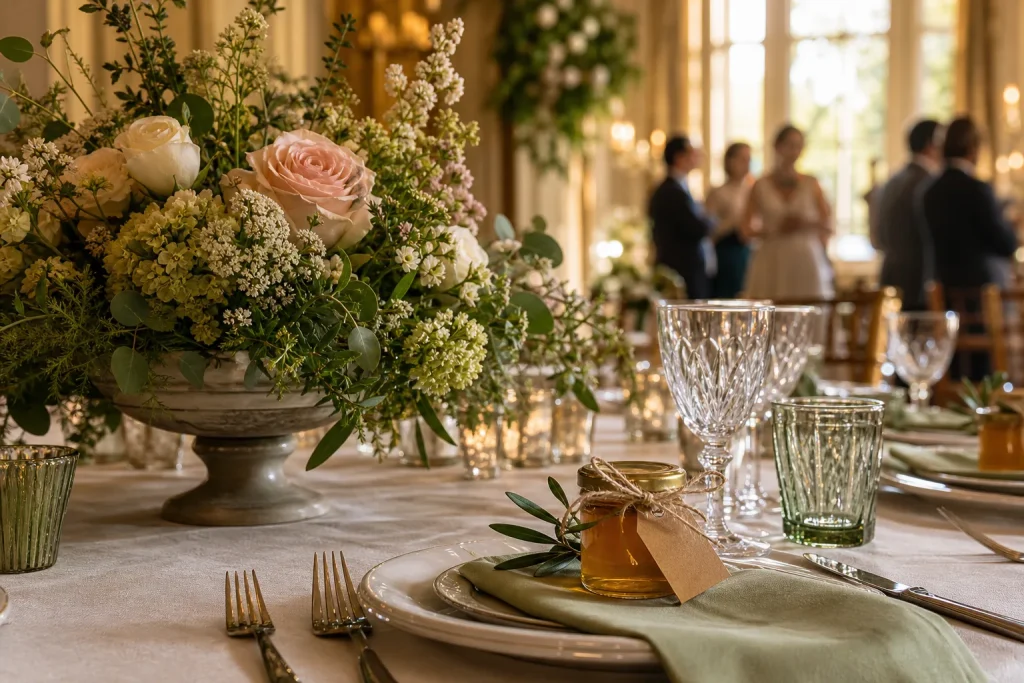
The common mistake is to treat favours and flowers as compulsory finishing touches, then squeeze them into the budget after the essentials are settled. That can leave you paying for objects guests barely notice while overlooking a simple detail that would make the room more comfortable or welcoming. Neither flowers nor favours earn their place simply by being traditional; the better question is what each will do on this particular day.
Optional details are easiest to judge when you compare them by purpose rather than category. A low bowl of garden flowers may soften a stark room, while a favour may give guests a useful memento or mark a shared custom. Either can be lovely. Either can also add cost, decisions, transport and work without changing the experience in a meaningful way.
Start with the effect
Before choosing an item, name the effect you want. Perhaps the reception room feels bare, the ceremony needs a clearer focal point, or guests will be waiting outside in changeable weather. An effect is more useful than a shopping list because it leaves room for several solutions, including doing nothing.
Ask who will notice the detail and at what moment. Flowers at the entrance may welcome guests as they arrive; a small arrangement on a signing table may appear in photographs but matter little to people seated far away. A favour placed beside each plate is visible to everyone, yet visibility alone does not make it valuable.
It helps to separate atmosphere from function. Atmosphere comes from the impression a space makes: colour, texture, scent, light and the way people gather within it. Function concerns comfort or ease, such as having a clear sign, a place to put a coat, or water available during a long wait. Some details do both, but many do only one.
Compare the real costs
The quoted price is only one part of a detail’s cost. Flowers may require delivery, suitable containers, access to water, placement before guests arrive and a plan for clearing them afterwards. Favours may involve choosing, ordering, assembling, transporting and setting out many individual items.
Time is a cost even when no one is paid for it. If a relative is meant to arrange jars of flowers on the morning of the wedding, that task may pull them away from getting ready or greeting guests. If a friend is asked to put favours at each place setting, the plan needs a clear handover and enough time before the room is in use.
Also consider what happens when a detail does not fit the venue. A venue may restrict open flames, confetti, fresh petals or adhesives; an arrangement may need to be moved to clear a serving area. Ask the venue coordinator about its rules and practical limits before placing an order. A detail that needs special handling can be more trouble than its appearance suggests.
Compare options at the scale you actually need. Instead of asking whether flowers are affordable in general, ask whether a few arrangements in prominent places achieve the effect you want. Instead of assuming every guest needs a separate favour, ask whether a shared display or a small edible item at the end of the meal better suits the way people will leave.
Flowers and atmosphere
Flowers often have their strongest effect where guests naturally look or gather: an entrance, the ceremony focal point, a table with a guest book, or the centre of a dining table. They can connect a room’s colours and make a plain surface feel considered. Their value depends on placement and scale, not on covering every available table.
Start with the venue itself. A historic room with patterned walls, a garden with mature planting or a dining room with attractive lamps may already have plenty of visual character. Adding more decoration can compete with what is there. A simple arrangement, or none at all, may let the setting do its work.
Ask a florist what is in season and what can be reused between parts of the day. A ceremony arrangement might be moved to the reception entrance, if the schedule, access and design allow it. That can make one choice serve more than one purpose, but it needs someone responsible for moving it and a realistic gap in the schedule.
Flowers also have practical considerations. Strong scent may be unwelcome near food or for guests sensitive to fragrance; tall arrangements can obstruct conversation across a table. If these concerns matter to your group, discuss unscented options and lower designs with the florist. A modest arrangement that leaves sightlines open may serve the room better than a dramatic centrepiece.
Favours and meaning
A favour is most persuasive when it has a clear connection to the couple, the place or the gathering. A small jar of local honey might suit a celebration held near a family apiary; a printed recipe could carry a tradition guests recognise. Without that connection, an object can feel like another thing to carry home.
Think about whether the item will be used, eaten or kept. Edible favours need suitable packaging and a way to account for dietary needs; fragile objects need careful transport. Guests who travel by train or plane may prefer something light, while some will not want a keepsake at all. A shared choice such as a donation can be meaningful, but it should be explained plainly rather than treated as a substitute guests must endorse.
Presentation adds work. Individual tags, ribbon and place settings can turn a straightforward favour into a small assembly project. If the item itself is the meaningful part, consider whether it needs elaborate wrapping. If the presentation is what makes it legible, keep the message brief and give guests a clear place to take it.
Comfort before decoration
Guest comfort is often affected by details that are not decorative. Clear directions to the ceremony room, a visible table plan, a sheltered waiting place and accessible water may make a more noticeable difference than another arrangement. These are not competing with beauty; they help guests take part without unnecessary uncertainty or discomfort.
Before spending on an optional detail, walk through the day from a guest’s point of view. Where do they arrive? Will they know where to go? Is there a long pause between ceremony and meal? Can someone with limited mobility reach the seating area and facilities? If a practical gap is apparent, consider addressing it before adding an ornamental item.
Some details can bridge function and atmosphere. A well-designed sign can orient guests while fitting the room’s style; a basket of blankets may be useful at an outdoor evening reception and contribute to a welcoming feel. The test is whether guests can understand and use the item easily, not whether it photographs well on its own.
Make the decision
Use a short comparison for each idea: the effect it creates, who benefits, what work it requires, and what the venue will allow. Then compare the full cost with the next-best option. The next-best option may be a simpler version, a borrowed item, a different placement or no purchase at all.
Say you are planning a reception in a bright community hall with bare round tables and a narrow entrance, and your budget can support either individual favours or a few flower arrangements. You want the room to feel warmer and guests to find the guest book easily. You might choose low flowers on the tables and a clear sign by the entrance, then skip the favours; the observable result to look for is a softer dining room and fewer guests pausing to ask where to leave a message.
That choice is not a universal case for flowers over favours. If the hall already has colourful table settings, while a family-made food item carries real meaning for your guests, the balance may change. The comparison is useful precisely because it gives you permission to choose differently when the setting and people are different.
Leave room to stop
Once the room feels welcoming and the practical needs are covered, there is no requirement to fill every surface or send everyone home with an object. A detail can be beautiful and still be unnecessary. The budget saved by leaving it out may be better kept for an unexpected venue need, or simply left unspent.
Make the final choice with the people who will carry it out. Confirm who orders, receives, places and clears each item, and remove anything without a realistic owner. A thoughtful day is not measured by how many details appear in photographs; it is shaped by whether the choices feel at home in the room and allow guests to settle into the celebration.